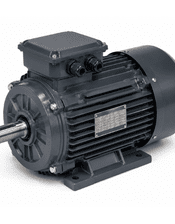
Electric motors convert electrical energy into mechanical rotational motion and are used in machinery, compressors, pumps, fans and other equipment. The Irankistai.lt catalogue includes motors with different power ratings, supply voltages and rotational speeds. When choosing a motor, consider not only its rated power but also the electrical supply, shaft dimensions, mounting configuration and duty requirements.
Single-phase electric motors are used in equipment designed for a single-phase supply. Some catalogue models are labelled 220 V, while the nominal voltage of a modern single-phase mains supply in Lithuania is generally 230 V. Always verify the motor nameplate and manufacturer's permitted voltage range before connection.
Three-phase electric motors are designed for equipment with a suitable three-phase supply. Some catalogue models are labelled 380 V, while the nominal phase-to-phase voltage of a modern three-phase supply is generally 400 V. Confirm compatibility using the motor nameplate, connection diagram and manufacturer documentation. A 380 V label alone does not establish compatibility with every 400 V installation.
The catalogue includes electric motors rated at 0.75 kW, 1.1 kW, 1.5 kW, 2.2 kW, 3 kW, 4 kW and 5.5 kW. The appropriate power rating depends on the mechanical load, starting conditions and required operating duty.
Two common speed groups in the range are approximately 1400 RPM and 2800 RPM. Actual rated speeds vary by motor design and load and should not be treated as universal specifications.
Electric motors may be used in air compressors, woodworking and metalworking machines, pumps, fans and other mechanical drives. Suitability for a particular machine depends on required torque, speed, starting load, mounting dimensions and electrical specifications. Before ordering a replacement motor, compare the original nameplate information with the proposed motor specifications.
Motors with the same power rating are not necessarily interchangeable. They may differ in shaft height, diameter, mounting positions, rotational speed, starting characteristics and electrical connections. Before replacement, check the original motor drawing, wiring diagram and the equipment manufacturer's requirements.
Motor wiring, protective device selection and starting-system installation should be performed by a suitably qualified professional. Disconnect power before installation and verify grounding, mechanical mounting, shaft guarding and cooling arrangements. Operate the motor only within the manufacturer's specified ratings and instructions.
They differ in their power supply, connection arrangement and electrical characteristics. Selection depends on the available supply and machine requirements.
That depends on the model's permitted voltage range. Check the motor nameplate and manufacturer instructions before connecting it.
Not necessarily. Compatibility depends on rated voltage, permitted tolerances and wiring configuration. Consult the manufacturer documentation.
They represent approximate rotational speed groups. Actual rated speeds depend on the motor design, mains frequency and load.
Do not decide based on power alone. Check machine load, starting conditions, electrical installation, protective devices, speed and mounting compatibility.
Check the compressor manufacturer's requirements for power, speed, starting load, drive type, mounting dimensions and electrical supply.