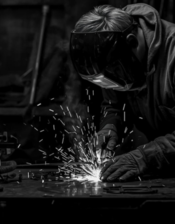
Welding equipment is used in metal fabrication, repair, installation, automotive bodywork and industrial applications. Selecting the right welding machine helps achieve the required joint quality, maintain process control and work efficiently.
At Irankistai.lt, explore MIG/MAG welding machines, MMA and TIG welders, plasma cutters, body repair spotters, resistance spot welding equipment, welding helmets, gas equipment, welding tables and accessories. Equipment can be selected for home workshops, automotive repair facilities and professional metalworking according to each model's specifications.
Before purchasing, consider the metal type and thickness, welding process, electrical supply, required output current, duty cycle and included accessories.
MIG/MAG welding uses continuously fed welding wire. MIG uses inert shielding gases, while MAG uses active shielding gases or mixtures. These processes are widely used in fabrication, automotive repair and repetitive welding applications.
When choosing a MIG/MAG welder, check its output current range, wire feed mechanism, supported wire diameters, torch connection, duty cycle and supply voltage. Some machines offer synergic control, pulse welding or additional MMA and TIG functions, depending on the model.
Welding without external shielding gas is possible using suitable self-shielded flux-cored wire, provided that the machine supports the required process and polarity. Not every MIG/MAG machine or wire is suitable. Check manufacturer specifications for wire compatibility, diameter and polarity.
MIG welding aluminium may require compatible feed rollers, a special liner, a suitable torch or a spool gun or push-pull wire feeding system.
MMA welding, also known as manual metal arc or stick welding, uses covered consumable electrodes. It is commonly used for fabrication, maintenance and repair where portability is important and a separate shielding gas cylinder is not required.
Check compatible electrode types and diameters, welding current range, duty cycle, electrical supply requirements and available features. Hot Start, Arc Force and Anti Stick may improve usability where supported by the machine.
Electrode selection depends on the base metal, joint requirements, welding position and electrode manufacturer recommendations. Maximum welding current alone does not determine machine suitability.
TIG welding uses a non-consumable tungsten electrode and shielding gas. It offers precise control of the welding arc and is often chosen for stainless steel, thinner components and applications requiring careful weld control.
DC TIG is commonly used for steel and stainless steel. Conventional TIG welding of aluminium generally requires AC TIG capability to help remove the aluminium oxide layer. Not all TIG welders support AC operation.
When choosing a TIG machine, check AC/DC capability, HF or contact arc starting, pulse functions, current adjustment, duty cycle and torch compatibility. Argon shielding gas, a regulator, tungsten electrodes and filler metal may also be required.
Plasma cutters are used to cut electrically conductive metals, including steel, stainless steel and aluminium. A plasma arc melts material and removes it from the cutting area.
Important specifications include cutting current, recommended clean-cut thickness, maximum severance thickness, duty cycle and compressed-air requirements. Clean-cut and maximum severance thickness ratings may differ significantly.
Many plasma cutters require a suitable air compressor, adequate filtration and moisture control. Torch tips, electrodes and other consumables must match the specific torch model.
Body repair spotters are used in automotive sheet metal repair to attach pulling elements and straighten suitable damaged areas. Select equipment according to its intended application, operating modes, compatible accessories and manufacturer limitations.
Resistance spot welders join metal components using electrode pressure and heat generated by electrical current. Suitability depends on material type, sheet thickness, electrode design and machine capabilities.
Resistance spot welding and body repair spotter operations are not identical processes. Choose equipment according to the required task.
Welding helmets protect the eyes and face against optical radiation, sparks and other hazards within the product's specified protective function. When choosing an auto-darkening helmet, consider shade range, optical class, switching response, viewing area and suitability for the welding process.
Appropriate gloves, protective clothing, ventilation and, where necessary, respiratory protection are also important. Welding fume exposure should be controlled using suitable engineering measures, including local exhaust ventilation.
Shielding gas equipment is required for relevant MIG/MAG and TIG processes. Gas cylinders, pressure regulators and hoses must be compatible with the gas type, fittings, pressure and manufacturer requirements.
Before use, check connection tightness, cylinder securing and regulator suitability. Regulators designed for different gases are not automatically interchangeable.
Welding magnets help temporarily position metal components. Welding tables provide working surfaces for positioning and securing workpieces, while equipment trolleys make it easier to move machines and accessories around the workshop.
Check table load ratings, dimensions, clamping options, trolley capacity and operating conditions.
Welding return cables, work clamps, electrode holders and torch accessories must match the machine's output current, connector type, duty cycle and torch design.
Incorrect cable sizing, poor electrical contact or incompatible accessories can reduce performance and increase overheating risks.
Gas torches and cutting equipment are used for heating, brazing, cutting and other operations according to their intended purpose. Check fuel gas compatibility, operating pressure, connections, included accessories and safety requirements.
Duty cycle indicates the proportion of a standard period during which a machine can weld at a specified current without exceeding its thermal limits. For example, a 60% duty cycle at 200 A generally means six minutes of welding within a ten-minute period under the manufacturer's specified test conditions.
Lower welding current may allow longer operating periods, but actual performance depends on the machine. Compare duty cycle ratings at equivalent output currents and ambient temperatures.
A welding machine is not always sold as a complete ready-to-use package. Depending on the process, additional equipment may include a torch, return cable, electrode holder, welding wire, electrodes, shielding gas cylinder, regulator and other accessories.
Check the exact contents of each product package. Similar-looking machines may be sold with different accessories.
MIG/MAG uses continuously fed wire, MMA uses covered consumable electrodes, and TIG uses a non-consumable tungsten electrode with shielding gas. The processes differ in operation, accessories and suitable applications.
Only if the specific machine supports suitable self-shielded flux-cored wire. Check wire compatibility, required polarity and manufacturer settings.
The choice depends on the intended work. A MIG/MAG machine with suitable controls may be convenient for learning, while MMA can also be practical for basic repair tasks. Consider material, power supply, accessories and safety requirements.
Conventional TIG welding of aluminium generally requires AC capability. DC TIG is more commonly used for steel and stainless steel. Specialised exceptions do not mean every DC TIG machine is suitable for aluminium.
At the specified output current, it generally means six minutes of welding within a ten-minute period under the manufacturer's test conditions. Duty cycle depends on output current and ambient temperature.
The compressor must provide the airflow and pressure required by the specific plasma cutter. Air quality, moisture control and manufacturer duty cycle requirements are also important.
Not always. Package contents vary by model. Check whether torches, cables, gas equipment and consumables are included before purchasing.
Consider the welding process, shade range, optical class, switching response, viewing area and comfort. The helmet must provide protection appropriate to the work and applicable safety requirements.