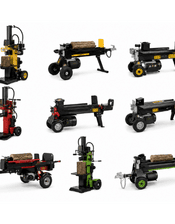
A log splitter makes preparing firewood significantly faster and easier than using an axe. A properly selected machine can handle logs of different diameters and wood hardness. When choosing a log splitter, it is important to consider not only the splitting force but also log dimensions, splitter design, power source and intended workload.
One of the most important specifications is the splitting force, usually measured in tonnes (t). The higher the splitting force, the easier it is for the machine to handle larger, harder or knotty logs.
As a general guide:
Keep in mind that the required splitting force depends on more than just the diameter of the log. Knotty, twisted or particularly hard wood may require significantly more force.
Before purchasing a log splitter, consider the typical size of the firewood you intend to process.
Manufacturers usually specify:
If you mainly prepare standard-length firewood for a stove or fireplace, a more compact model may be sufficient. For longer and thicker logs, choose a larger splitter designed to accommodate such material.
Horizontal log splitters are generally more compact and convenient for preparing small to medium quantities of firewood. They are particularly suitable for household use.
Vertical log splitters often provide greater splitting force and are more convenient when working with large and heavy logs. Large logs can be positioned in the splitting area without lifting them onto a high horizontal working surface.
When choosing between the two designs, consider not only performance but also the size and weight of the logs you will regularly handle.
Electric log splitters are a practical choice for use around the home, garage or farm where an electricity supply is available. They generally require less maintenance and are straightforward to operate.
When choosing an electric model, check its power supply requirements. More powerful splitters may require a 400 V three-phase power supply, while smaller models can operate from a standard 230 V supply.
Petrol log splitters provide greater mobility and are suitable for locations where electricity is unavailable. They can be particularly useful in forests, remote properties or other locations where access to mains electricity is limited.
If you prepare a large amount of firewood every season, splitting force is not the only important factor – the operating cycle time also matters.
Faster cylinder movement and return speeds allow more logs to be processed within the same period. For intensive use, consider:
When processing shorter logs, an adjustable stroke can reduce unnecessary cylinder travel and shorten each operating cycle.
A standard log splitter usually splits a log into two pieces. Some models can be equipped with a cross or four-way splitting wedge, allowing the log to be divided into several pieces during a single cycle.
This can improve productivity, although its effectiveness depends on the splitter's power, wood type and log size.
Log splitters can be heavy machines, so it is worth considering:
If the splitter will frequently be moved around a yard or property, larger transport wheels and a convenient handle can make a significant difference.
A log splitter generates considerable force, making safety one of the most important considerations.
Choose equipment with manufacturer-designed safety features, such as operating controls intended to reduce the risk of accidental activation, log supports and a stable construction.
Always follow the operating instructions supplied with the specific machine and use appropriate personal protective equipment.
For occasional preparation of small amounts of firewood, a compact electric horizontal log splitter will often be sufficient.
For regular household or farm use, choose a more powerful model capable of handling larger-diameter logs and providing sufficient splitting force.
For large logs and higher volumes of firewood, a powerful vertical log splitter may be the more practical solution.
For working in locations without access to electricity, consider a petrol-powered or other self-contained log splitter.
When choosing a log splitter, do not focus solely on the maximum splitting force. Consider log length and diameter, wood type, workload, splitter design, power source and operating cycle speed together. This will help you select a log splitter that is better suited to your actual needs and allows you to prepare firewood faster and more efficiently.