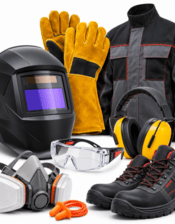
Welding safety equipment helps reduce risks associated with hot metal, sparks, weld spatter and sharp workpieces. Suitable personal protective equipment is an important part of a safe welding workstation, but it must be combined with appropriate work practices, ventilation and other necessary protective measures.
This Irankistai.lt category currently offers welding gloves, including STEPO, WELD ZONE and YATO models. Leather welding aprons and protective sleeves also appear in the catalogue, although availability depends on each product's current status.
Different welding processes place different demands on hand protection. MIG/MAG and MMA applications may involve exposure to sparks, spatter and heat. TIG welding often requires greater finger dexterity, while the level of protection must still match the actual hazards.
Glove type or brand alone does not establish suitability. Check the manufacturer's technical information and instructions before selection.
Before starting work, inspect gloves for damage and ensure they are dry and correctly sized. Do not use worn or contaminated equipment when its protective performance may be reduced. Gloves do not replace a welding helmet, suitable protective clothing, respiratory protection, ventilation or other measures required by a risk assessment. Assess entanglement hazards separately when working near moving machinery.
Not always. Protection and dexterity requirements differ, so follow the manufacturer's stated intended use.
They are different glove sizes. Exact dimensions may vary by manufacturer, so consult the specific size chart.
No. Protection depends on the model's test results and manufacturer-defined limitations.
That depends on the welding process, expected sparks and spatter exposure, and the workplace risk assessment.
EN 12477 is a standard for protective gloves used by welders. Check the individual product documentation for declared conformity and protection classification.